![]()


Background
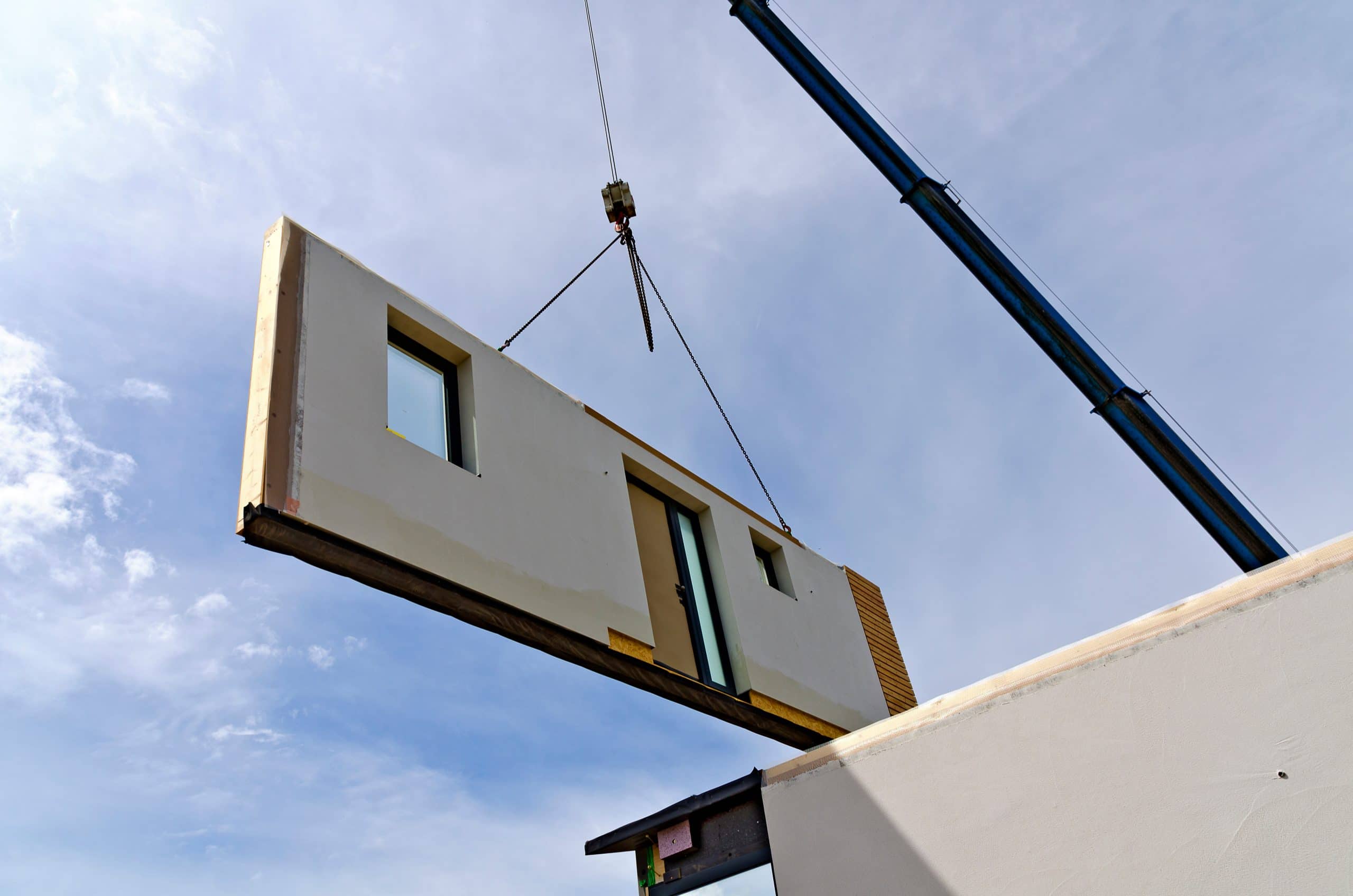
The company is a leading manufacturer of prefabricated houses. The market is very favourable and in order to meet the expected demand, capacity will have to double within two years – but without any increase in manning.
The cooperation with Mantec started with a pre-study to assess prospects of doubling the capacity of the production facility. The study confirmed weaknesses such as:
Implementation
To tackle these identified problems, the client entered into a full project with Mantec aimed at industrialisation of the business. It was divided into three different areas – improvements in production, purchase outsourcing, and improvements in construction.
Production
The existing layout was revised to an industrial flow with the potential to manufacture according to “lean production” and “right from the beginning”. Production data was updated to assist management in controlling the business. A scheme of paced workflow was implemented, so as to avoid production bottlenecks. This helped the whole organisation to work, plan and coordinate activities with a clear strategy to always deliver on time. New methods for controlling production materials were designed and implemented.
In addition, production management teams were trained to lead and control the business, and deal with daily interruptions In a structured way that enabled continuous improvement.
Purchasing and outsourcing
Part components with low added value were outsourced to sub-suppliers, giving them the responsibility for delivering directly to the construction site. Consequently, quality demands (and to some extent working content) increased for existing sub-suppliers.
Construction
More stable and partly simplified methods of construction were implemented. This led to some new types of material being used.
Results
The client received a nomination for their excellent work within the LEAN-field, at the Swedish Construction Industries own LEAN-awards. Mantec were mentioned in the nomination as having been a big factor in teaching the organisation a “real LEAN” mentality.
Other benefits to the client were:


Background
The factory, with over 500 employees, is owned by an American group that manufactures building materials. The corporate group employs 20,000 people worldwide. The factory is built around three production units – pure line production, stand-alone production, and a distribution centre (a warehouse for packing and deliveries). For a long time it had problems regarding profitability, and at the same time it could not deliver the volumes that the market wanted.
An initial analysis conducted by ManTec found several problems.
Based on the initial analysis, ManTec and the client decided to undertake a project aiming to raise productivity and production volume, reduce scrap, and increase delivery accuracy.
A management control system, created to achieve predictability in operations, was rolled out in two steps.
Step 1 – which was initiated immediately after the project started, was to institute daily deviation management based on current plans and follow-up opportunities.
Step 2 – was to ensure proactive behaviour, achieved by creating the conditions to always reach the week's volume and productivity goals, by early identification of deviations from plan (at shift level), analysing the cause and taking corrective action. In addition reality-adapted (occupancy and capacity match) production plans were introduced.
Other key focus areas included:
In order to effectively improve the current workflow, it was natural to involve the operators throughout the project, to take advantage of their knowledge. Consequently changes were implemented smoothly, because the operators had an understanding of them and felt that they had influenced and participated in their design.
Results
Benefits to the client of successfully implementing the project include:
Overall, the project ROI amounted to about 400%, corresponding to annualised savings of SEK 62M (€6.9M) for the client organisation.


Background
The parent group employs more than 13,000 people across Europe, of whom around 800 are in Poland where it is a leading supplier of heavy engineered products to the construction industry. Despite this very strong market presence in Poland, there were concerns that the levels of productivity were sub-optimal and that the non-productive overhead structure was inappropriately large.
The group’s largest factory in Poland, with around 600 employees, was chosen for the project because it encompasses both of the two key manufacturing processes as well as a substantial back-office support organisation.
The plant comprises two completely separate manufacturing units — one long established, the other brand new — together with a small, secondary processing unit and extensive office accommodation.
Implementation
A pre-study was carried out across all areas of the factory site to determine areas of opportunity and estimate the potential that could be realised through a Mantec programme. It was agreed, based on the pre-study output, to engage in a productivity programme that would cover both of the factories and all support and administration areas and would include a restructuring of the organisation.
Before the programme, responsibilities overlapped and managers at all levels were generally very passive. Reorganisation was the key element in developing an integrated, dynamic management team with clear roles and responsibilities, and it was this group, working with Mantec, that drove the changes throughout the plant.
In the older factory, which is “process line” based, there was a three-way approach to increasing productivity:
The “perfect production cycle”, which was developed with the sales department, substantially reduced the number of changeovers — and, therefore, lost production time — by fixing a monthly cycle of production.
In the newer factory, where the work could broadly be described as “batch-based manual work”, a complete and integrated management control system was developed and installed in conjunction with the plant manager and his team.
To support the two factories, an entirely new system was developed for maintenance in conjunction with the (newly appointed) manager. This resulted in a 38% improvement in productivity whilst at the same time external sub-contractor costs were reduced substantially.
Finally, the support and administration functions were streamlined and consolidated: many employees who had previously been in the office building moved out so they were closer to the factory floor and thereby became more integrated with the business.
Results
As a result of the programme, productivity in both factories increased by 40%. In addition, overall overheads were reduced by 30% in labour cost terms.
At the end of the programme, a day-long presentation — including factory tours in small groups led by managers — was made by the management team to the divisional Chief Executive, the Chief Operating Officer and many plant managers from around Europe.
For the board members present, it was the proof they needed that, important though the financial benefits were (with a return on investment of 470%), their most fundamental goal had been reached — the plant now had managers who were active, dynamic, focused on performance and worked together as a real team.

Background
The company, which develops, manufactures and markets laminated flooring, has a leading position in both the USA and Europe and a turnover of more than 3 billion EUR 335 million.
One unit manufactures laminated flooring and has 150 employees of which 120 are in production. For a long period of time it showed low profitability, and eventually its figures dipped into the red. Analysis showed that this was caused by high levels of material scrap and low productivity.
The company believed it needed help in developing and implementing an action programme to drive the manufacturing unit back into profit, and turned to Mantec for assistance.
Analysis
Historically, the company directed its attention to volume. Cost awareness was low. But as volumes have deceased it has become necessary to shift focus to cost efficiencies, for example by analysing material yield and productivity. However, the company lacked a powerful goal steering methodology to help them undertake this type of analysis.
Implementation
With the help of Mantec specialists, a task force was put together comprising the production manager, the controller, the manager of production technique and the two central foremen. They met each morning to go through the previous day’s actual output, and sought explanations for unfavourable variances and any problems encountered.
By doing so, their mutual understanding increased and they were able to build a collective view on what problems needed to be eliminated to increase profitability. They created an activity list that focused on actions which could be implemented quickly.
Parallel to this task force activity, a goal steering process was worked through which included the following elements:
When these elements were in good shape, management moved from the task force to the line. This was achieved by setting up meetings between shift leaders and production leaders (daily), production manager and production leaders (two to three times a week), and between the cross functional groups such as production leaders, production technicians and maintenance staff (weekly).
Two other clear benefits for the company were noted during the course of the project. Firstly, supporting functions became indirectly goal-steered, because of the ’pull’ from the operational functions. Secondly, the company shifted focus from ’how to invest´ to how to solve problems´, and this resulted in smaller investments but increased workflow and continuous improvement. When analysing and solving the problems a great deal of importance was attached to establishing a methodological working method according to the cause-effect principle.
Results
All solutions big and small were successfully implemented. The project paid for itself many times over before it was even complete. In particular:
Site Map, Privacy statement, Disclaimer © 2012 Mantec International AB
All Rights reserved